Colors for your photographs

40 palettes for maternity and family

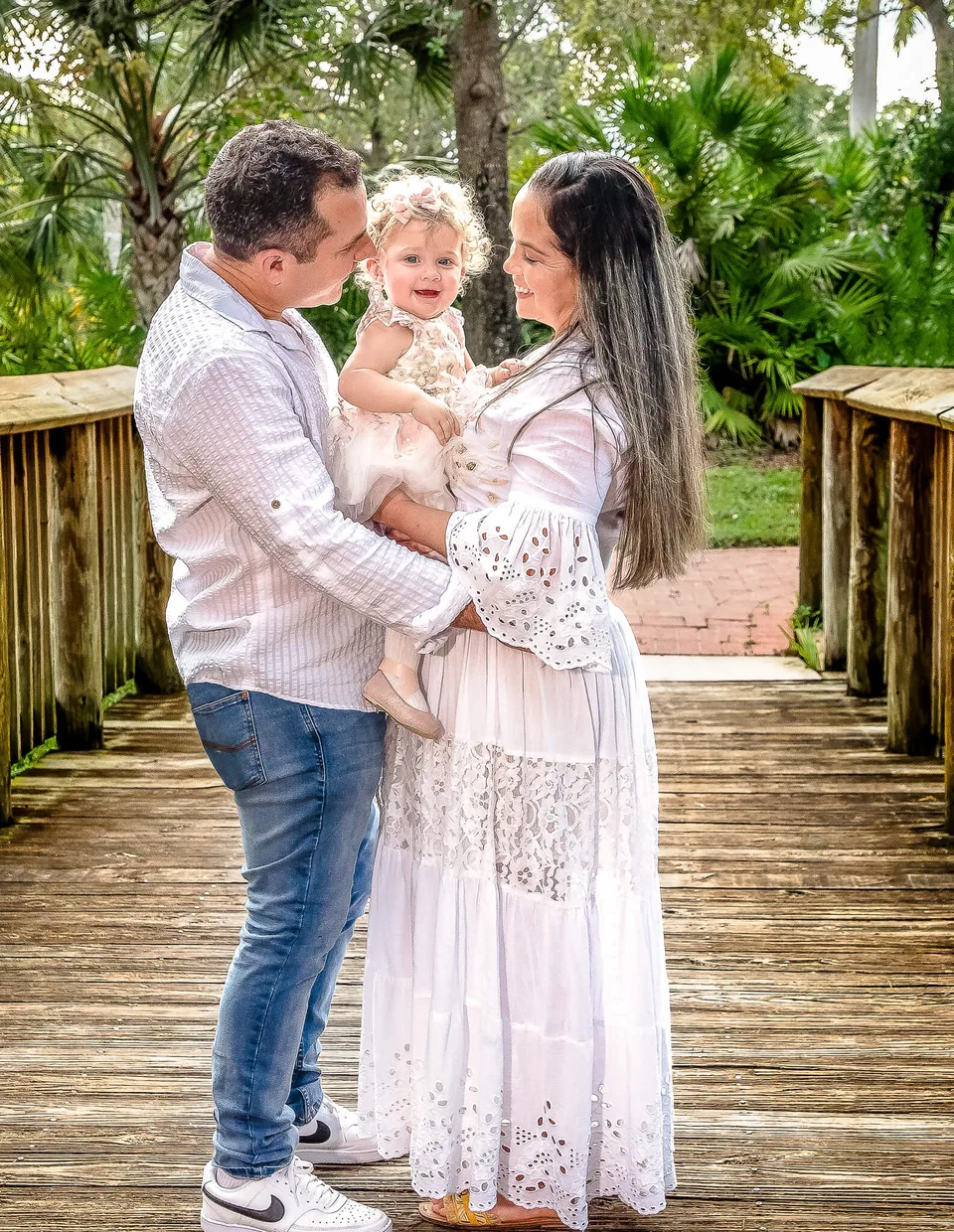
Two adults holding a little girl on a wooden bridge among palms · Veterans Park, Royal Palm Beach

I will help you choose colors that work with your family, the location and clothes you enjoy wearing. Start with these steps, then use the 40 palettes to compare options from soft shades to vivid colors.

By Oscar Padrón · True Love Fotos

How do I coordinate outfits for the whole family?

Start with one piece you actually want to wear. That might be your maternity dress, a shirt or a favorite item belonging to one of your children. I would use its colors as a starting point for the remaining outfits.

Choose two to four colors, or several shades from one color family. Spread lighter and darker tones across the group; everyone does not need the same shirt. If one piece has a pattern, pick one or two of its colors for the other solid garments.

Before buying anything, place clothes, shoes and accessories together near a window. Take a photo without filters. Notice which piece attracts your attention first and whether that is what you want to highlight. Then try sitting, walking and hugging in the outfits.

Your location is part of the color palette

For pictures at the beach by Worth Avenue, consider the pale sand, water and open space. Ivory, sand, soft blue and sage offer a gentle option; coral or turquoise bring more presence. You do not need to avoid bright colors if you enjoy wearing them.

Around Worth Avenue’s architecture, you can explore dressier outfits and contrasts such as navy with ivory or black with camel. Choose a similar level of formality for the whole family, including footwear: an elegant dress beside sportswear may feel disconnected.

At Veterans Park in Royal Palm Beach, consider how clothing separates from the green surroundings. Dressing everyone in dark green may cause parts of the group to blend into foliage. Cream, pink, blue or terracotta offer alternatives; the specific shade and background matter more than a fixed rule.

How to distribute colors without buying identical outfits

Imagine sage, ivory, sand and soft blue. You could choose a sage dress, an ivory shirt with sand trousers, an ivory dress and a soft blue shirt. Change who wears each color to suit their preferences and existing clothes; the example does not prescribe a particular outfit for each person.

A long dress occupies more of a photograph than a bow or belt. If you choose a red dress, let it be the main accent and try quieter colors around it. To spread that emphasis, repeat red in another small piece.

For one color family, vary the brightness: ice blue, pale blue, denim and navy, for example. With two colors, alternate where each appears. Linen, cotton and knit textures can add variety without adding colors.

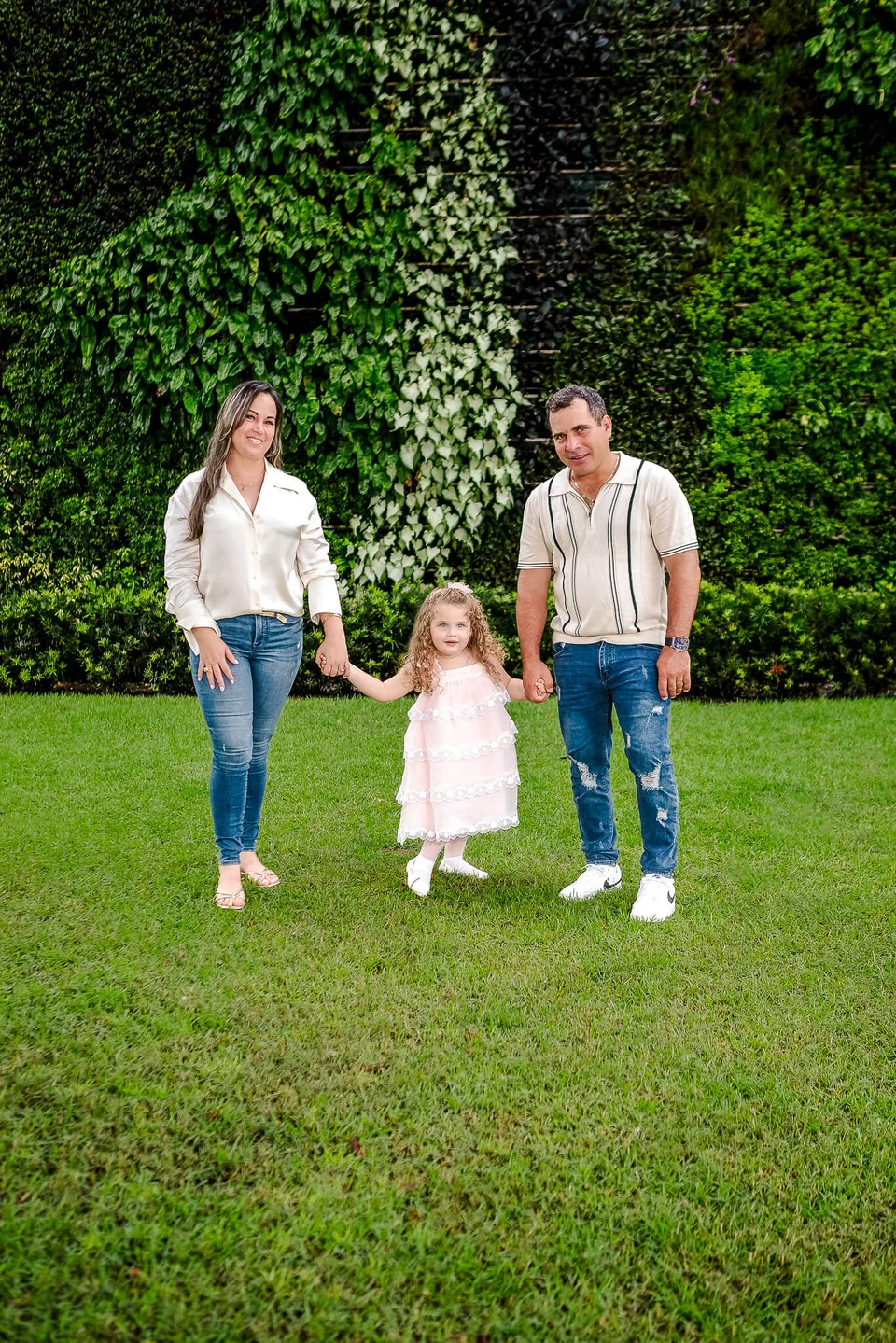
Two adults and a little girl holding hands in front of a leafy wall · Worth Avenue, Palm Beach

Maternity outfits: start with how you feel

For a maternity session, I would start with your dress and then coordinate your partner and children. My maternity packages include a credit toward dress rental with our partner provider. We review the choice during preparation; you do not need to buy a dress before speaking with me.

Try your undergarments with the dress near a window, both standing and sitting. Check transparency, straps and seams. Choose coverage that feels comfortable and shoes you can walk in; if you bring different shoes for photographs, bring your comfortable pair too.

A flowing dress and a fitted dress create different looks. Your preference and how the fabric feels on your body should guide the decision. You can send me a photo of the outfit so we can review it before the session.

Patterns, skin tones and small details

If you love a patterned piece, start there and simplify the surrounding outfits. Look especially at large lettering, logos and graphics across the chest: they may draw attention before faces. You can still keep personality in the clothing.

I would not assign a mandatory color list to your skin tone. Hold garments near your face in natural light and compare how you look and feel. Screen swatches are a guide; fabric, light and your screen can change the color you perceive.

Check bulky pockets, tags, straps, watches and hair ties on wrists. Decide what you want to keep in the photograph. Include shoes and accessories in your outfit trial; they are easy to overlook until the last moment.

Before leaving: prepared outfits and a comfortable family

Set outfits aside and check stains, wrinkles and fit ahead of time. Bring water, easy-to-eat snacks and a spare outfit for children if needed. It is better to discover whether clothing is comfortable before arriving than during the session.

If children are joining and you want some couple or solo maternity photographs, it helps to bring a grandparent, relative or nanny who can stay with them while I photograph the adults. The children can take a break with someone they trust.

Tell me how you feel before we start. If you have been dizzy, feel unwell or need to stop, let me know; the session is not a reason to push through discomfort. Questions about your health belong with your healthcare professional.

Red and blue: three different results

Cherry red with denim can feel casual: picture a cherry dress, a denim shirt and sand or white pieces around them. The faded blue softens the overall intensity. Compare jean washes together; they do not need to match exactly.

Burgundy with navy creates a deeper combination. I would mix in ivory or blush so the darker pieces do not gather in one area. Bright red with royal blue creates stronger contrast: try one as the main color and the other in a smaller piece before dressing half the family in each.

Have a session in mind? Let’s talk about your ideas.

Two colors for larger families

With navy and ivory, one person could wear a navy dress; another, an ivory shirt and navy trousers; another, an ivory dress. Repeat the combination while changing which color occupies more space. A group of six or eight does not need a different color for every person.

Consider who will stand beside whom. If several navy outfits come together, add a lighter piece between them or redistribute the clothes. Include grandparents in the palette without asking them to wear a style that feels uncomfortable.

One color family with enough variation

A monochromatic palette allows differences in brightness and fabric. With blue, combine ice blue, pale blue, denim and navy. With pink, try light pink, antique rose and raspberry. You do not need five garments in exactly the same shade.

Photograph the outfits together and look at the image in black and white too: if every garment looks equally dark, try a lighter one. This is a rough contrast check, not a requirement to photograph the session in black and white.

Dressing for Florida without a seasonal color rule

You can wear burgundy in spring or light colors in fall. For an outdoor session in Florida, choose fabric according to the expected weather and how the garment feels. Try lightweight, comfortable clothing; even a fresh-looking fabric may have a hot lining.

Check how the dress moves in a breeze and whether it becomes transparent with light behind it. If you choose layers to vary the outfit, make them easy to remove. Comfort for children and the expectant mother matters more than maintaining a seasonal palette.

From a color swatch to clothes you can find

Use colors as a direction rather than codes you must match in a store. Place white garments together: a cool white can look different from warm ivory. Decide whether you like that difference before buying more pieces.

If you start with a pattern, choose its two easiest-to-find colors and repeat them in solid garments. Check your closet first. Send a photo of all the pieces together, including shoes, so I can help with the actual outfit rather than just store images.

How to create your own palette

Choose your favorite garment and identify its main color. Add a neutral you already own, then try a lighter or darker shade for another person. Include a fourth color only if you prefer the result.

Compare those outfits with a picture of the setting we chose. If the combination feels too intense, reduce the area of the strongest color; if it blends into the background, add a piece with more contrast. Save a photo of the final combination so you can prepare without last-minute guesses.

Common outfit questions

Can we all wear white? Yes, if you like that look. Check transparency, different whites and fabric texture. On a pale beach, you can also add sand or a medium shade to distinguish garments.

Can we wear black? Yes. Try it with the complete group and check texture, especially when several people wear it. Does my child have to wear a color they dislike? I would rather adapt the palette to comfortable clothing than turn outfits into an argument before the session.

Do we need everything new? No. Start with what you own and change only what is needed. Must we copy a palette? No: these 40 suggestions help you compare ideas and talk through choices; they are not booking requirements.

How to use these 40 combinations

Search for a color you already like and compare two or three options. Each card shows colors, an outfit distribution and a styling image. Adapt the clothes to your family: you do not need the same number of people or the exact items pictured.

The palette images are AI-created styling examples, not client sessions or photographs from my portfolio. They help you explore clothing combinations. Their backgrounds do not advertise studio services or identify our locations.

Save the number of your favorite palette and send me a photo of the clothes you have. I can help you decide what to keep and what to adjust for your family or maternity photo session.

Explore all 40 combinations

01. Beach breeze
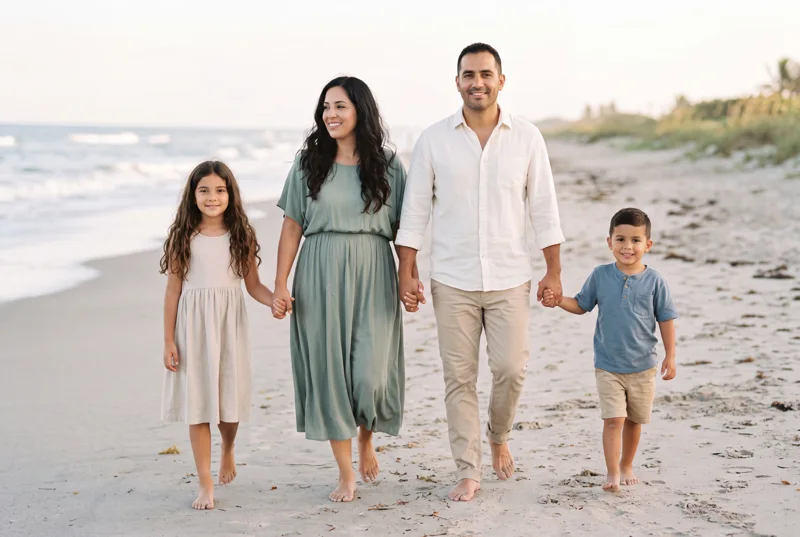
AI-created clothing example: Ivory, Sand, Sage, Soft blue
  • Ivory
  • Sand
  • Sage
  • Soft blue

Soft blue and green sit alongside neutrals. Keep enough contrast against pale sand.

Outfit distribution: sage dress; ivory shirt and sand trousers; oatmeal dress; soft blue shirt and sand shorts.

02. Rose and sage
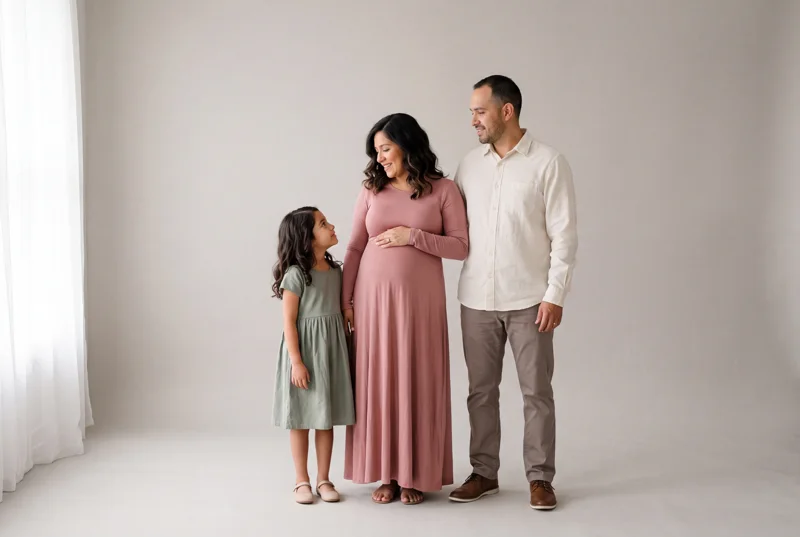
AI-created clothing example: Dusty rose, Ivory, Sage, Taupe
  • Dusty rose
  • Ivory
  • Sage
  • Taupe

Let pink lead, then spread sage, ivory and taupe across the remaining outfits.

Outfit distribution: dusty rose dress; ivory shirt and taupe trousers; sage dress.

03. Earth tones and blue
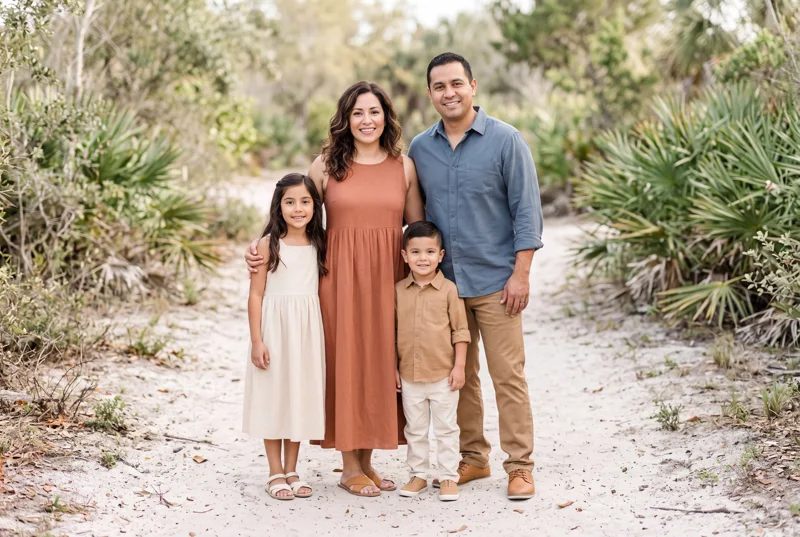
AI-created clothing example: Terracotta, Slate blue, Cream, Camel
  • Terracotta
  • Slate blue
  • Cream
  • Camel

Slate blue softens the contrast with terracotta. Check the warm tones in trousers and shoes together.

Outfit distribution: terracotta dress; slate blue shirt and camel trousers; cream dress; camel shirt and cream trousers.

04. Garden contrast
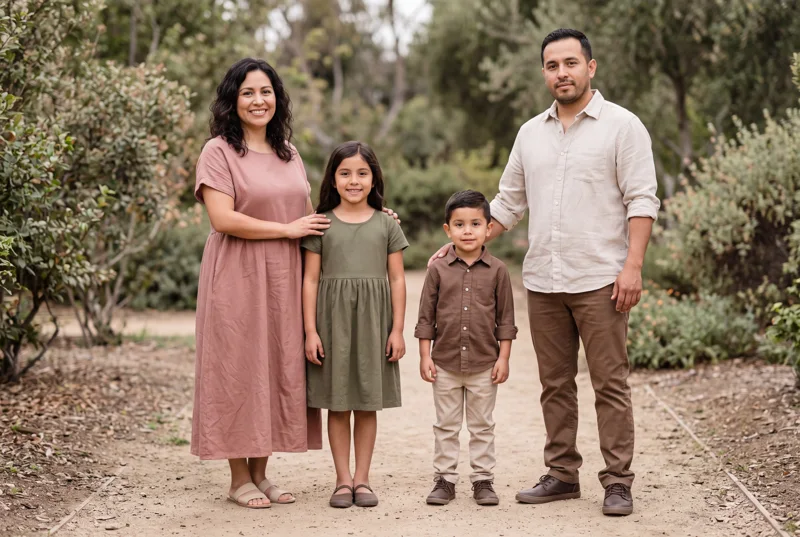
AI-created clothing example: Oatmeal, Antique rose, Olive, Brown
  • Oatmeal
  • Antique rose
  • Olive
  • Brown

Spread out the olive rather than dressing everyone in green against foliage. Rose helps separate the group from the background.

Outfit distribution: antique rose dress; oatmeal shirt and brown trousers; olive dress; brown shirt and oatmeal trousers.

05. Textured neutrals
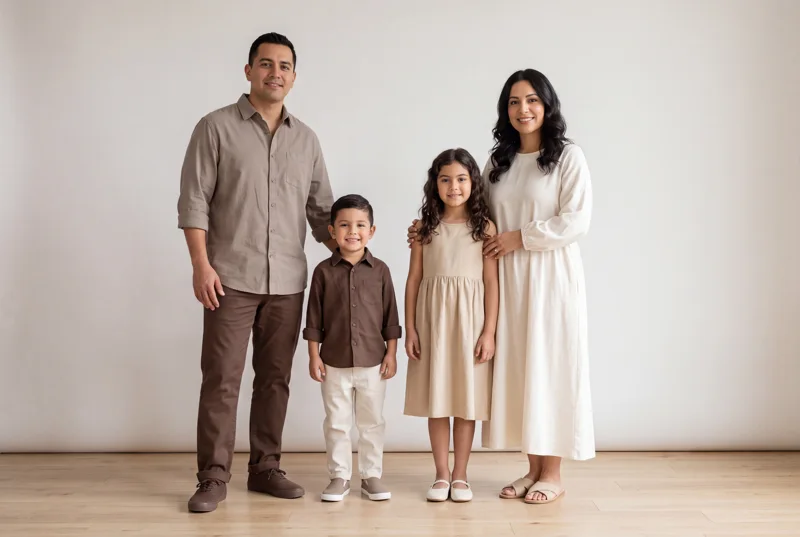
AI-created clothing example: Ivory, Oatmeal, Taupe, Chocolate
  • Ivory
  • Oatmeal
  • Taupe
  • Chocolate

Vary light and dark neutrals. Linen and cotton add texture without another color.

Outfit distribution: ivory dress; taupe shirt and chocolate trousers; oatmeal dress; chocolate shirt and ivory trousers.

06. Deep blue
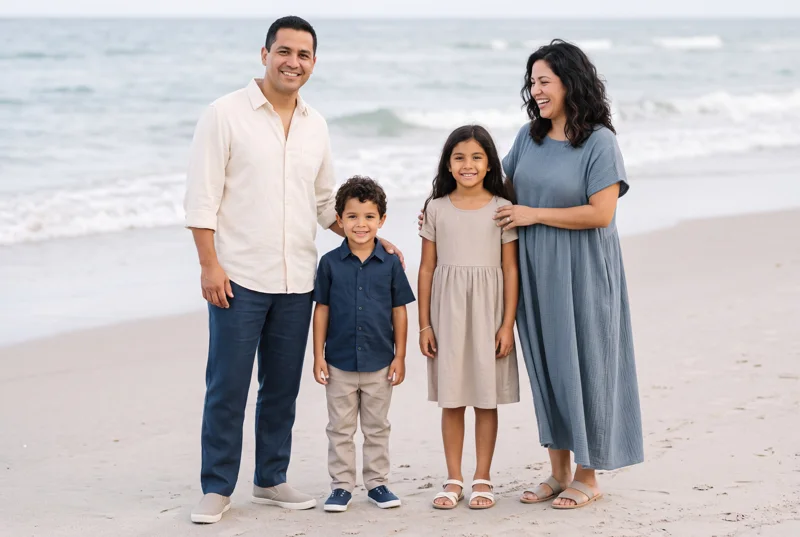
AI-created clothing example: Navy, Blue gray, Ivory, Stone
  • Navy
  • Blue gray
  • Ivory
  • Stone

Navy and blue gray differ enough in brightness to help individual outfits remain distinct.

Outfit distribution: blue gray dress; ivory shirt and navy trousers; stone dress; navy shirt and stone trousers.

07. Cherry red and denim
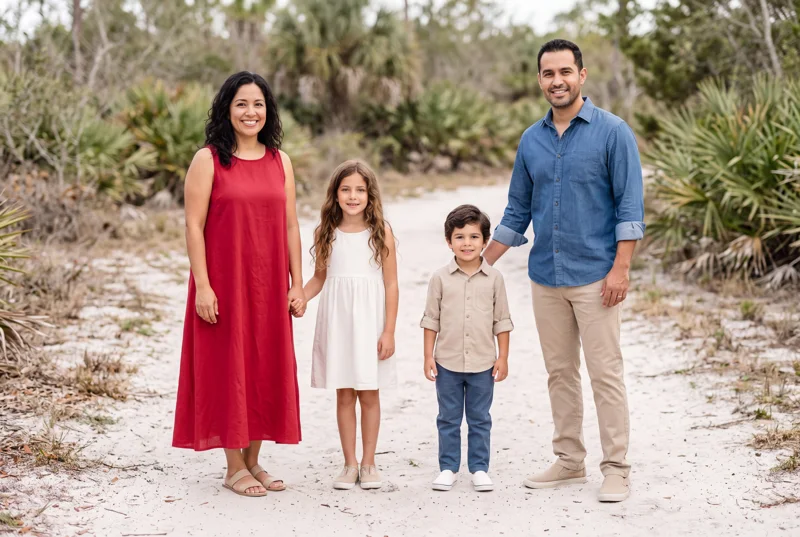
AI-created clothing example: Cherry red, Denim blue, White, Sand
  • Cherry red
  • Denim blue
  • White
  • Sand

Let cherry red lead. Denim gives the combination an informal base, with white and sand around the red.

Outfit distribution: cherry red dress; denim shirt and sand trousers; white dress; sand shirt and denim jeans.

08. Burgundy and blush
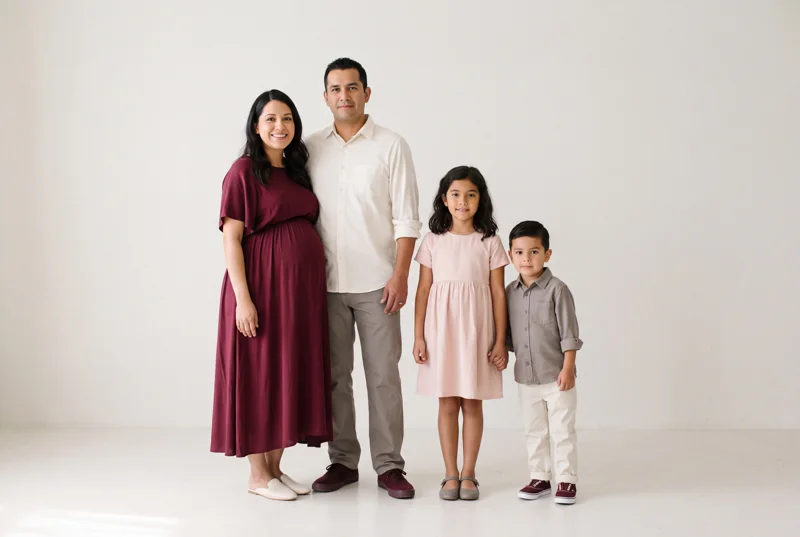
AI-created clothing example: Burgundy, Blush pink, Ivory, Warm gray
  • Burgundy
  • Blush pink
  • Ivory
  • Warm gray

Burgundy and blush share a reddish base at different depths. You do not need holiday accessories.

Outfit distribution: burgundy dress; ivory shirt and warm gray trousers; blush pink dress; warm gray shirt and ivory trousers.

09. Tomato red and navy
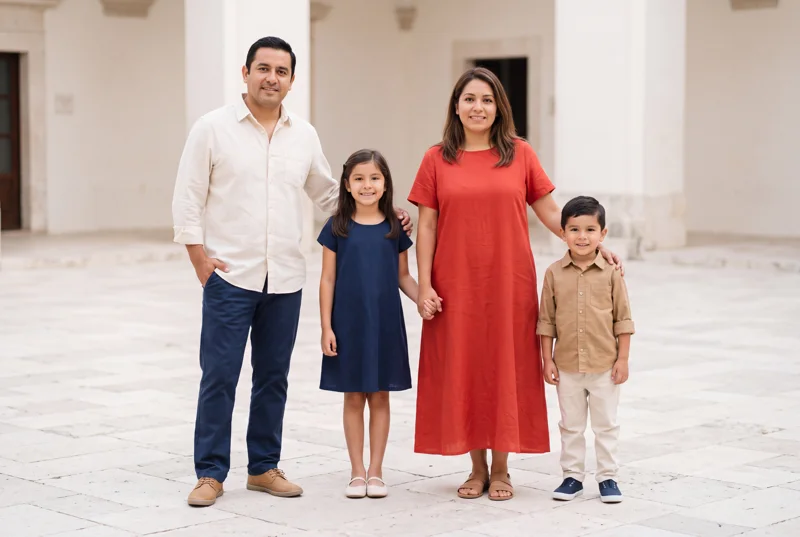
AI-created clothing example: Tomato red, Navy, Cream, Camel
  • Tomato red
  • Navy
  • Cream
  • Camel

Tomato red is warmer than cherry red. Navy provides depth and cream separates the darker tones.

Outfit distribution: tomato red dress; cream shirt and navy trousers; navy dress; camel shirt and cream trousers.

10. Brick red and olive
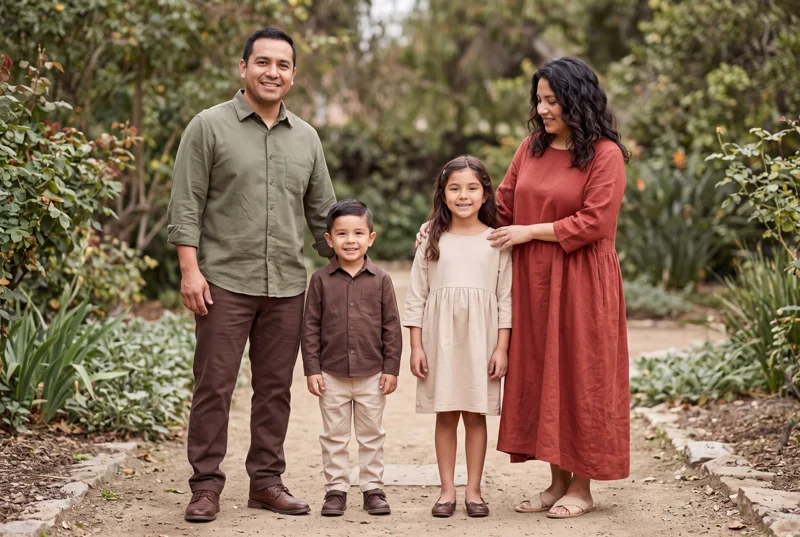
AI-created clothing example: Brick red, Olive, Oatmeal, Chocolate
  • Brick red
  • Olive
  • Oatmeal
  • Chocolate

Earthy red and green can feel natural together. Check olive against dark foliage.

Outfit distribution: brick red dress; olive shirt and chocolate trousers; oatmeal dress; chocolate shirt and oatmeal trousers.

11. Royal blue and white
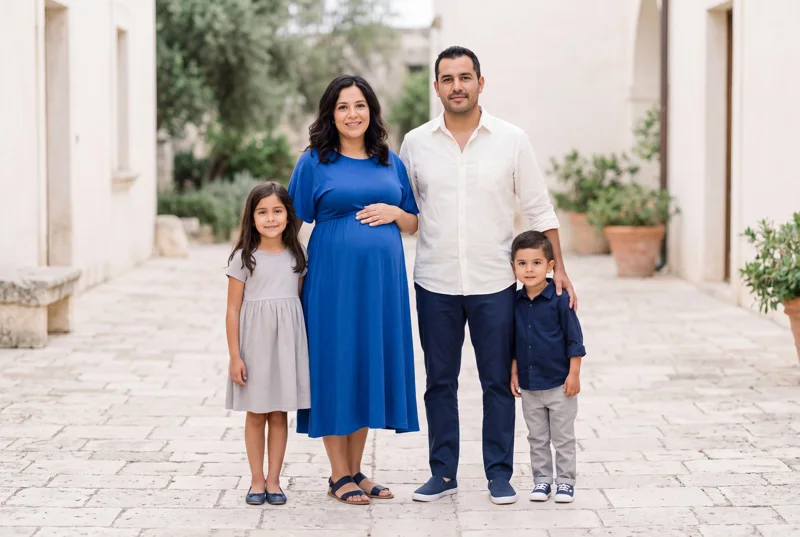
AI-created clothing example: Royal blue, White, Pearl gray, Navy
  • Royal blue
  • White
  • Pearl gray
  • Navy

An intense blue can fill a whole dress. White and pearl gray bring lighter areas around it.

Outfit distribution: royal blue dress; white shirt and navy trousers; pearl gray dress; navy shirt and pearl gray trousers.

12. Pale blue and camel
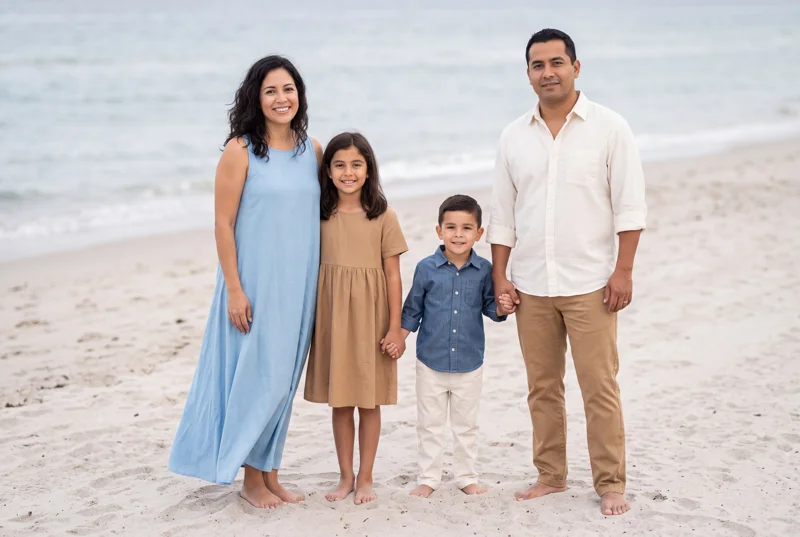
AI-created clothing example: Pale blue, Camel, Ivory, Denim blue
  • Pale blue
  • Camel
  • Ivory
  • Denim blue

Pale blue is lighter than denim. Camel connects the two without requiring perfectly matched blues.

Outfit distribution: pale blue dress; ivory shirt and camel trousers; camel dress; denim shirt and ivory trousers.

13. Turquoise and coral
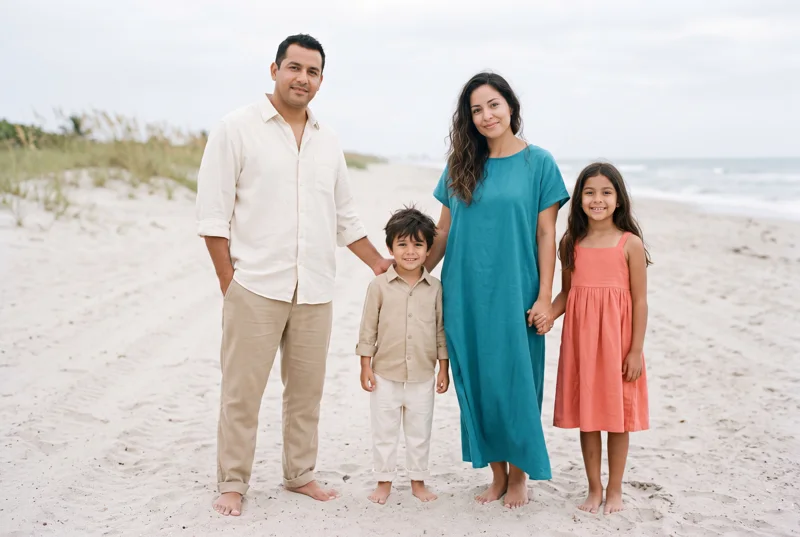
AI-created clothing example: Turquoise, Coral, Ivory, Sand
  • Turquoise
  • Coral
  • Ivory
  • Sand

Turquoise and coral combine warm and cool color. Keep some outfits neutral for a quieter result.

Outfit distribution: turquoise dress; ivory shirt and sand trousers; coral dress; sand shirt and ivory trousers.

14. Lavender and pearl gray
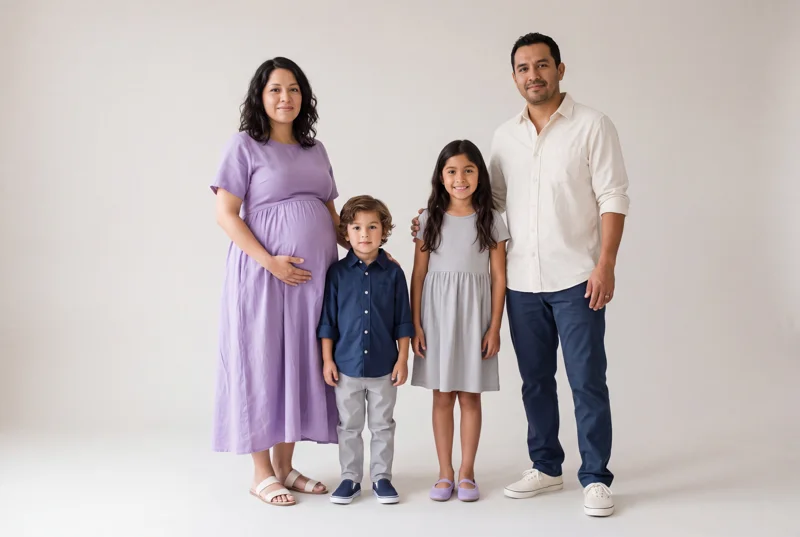
AI-created clothing example: Lavender, Pearl gray, Ivory, Navy
  • Lavender
  • Pearl gray
  • Ivory
  • Navy

Lavender gives you purple without a very dark dress. Navy adds depth to the light palette.

Outfit distribution: lavender dress; ivory shirt and navy trousers; pearl gray dress; navy shirt and pearl gray trousers.

15. Plum and antique rose
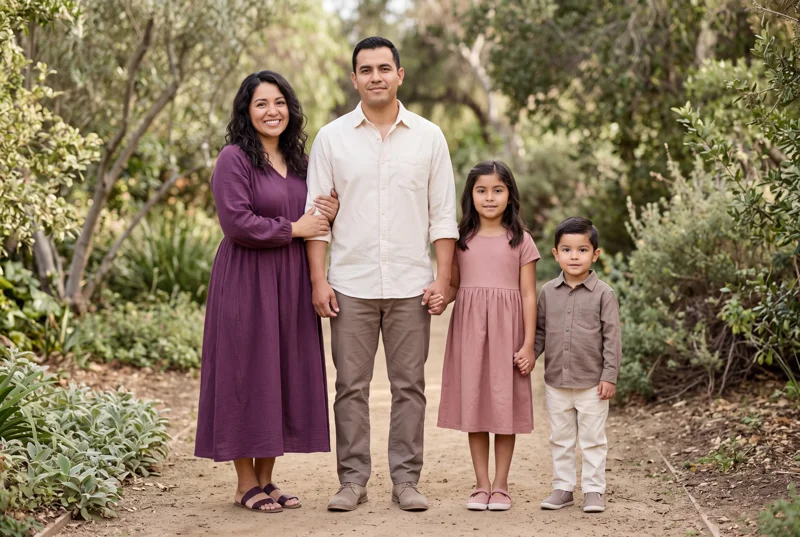
AI-created clothing example: Plum, Antique rose, Cream, Taupe
  • Plum
  • Antique rose
  • Cream
  • Taupe

Plum and antique rose share reddish undertones. Make sure dark clothing remains visible against shadow.

Outfit distribution: plum dress; cream shirt and taupe trousers; antique rose dress; taupe shirt and cream trousers.

16. Violet and mustard
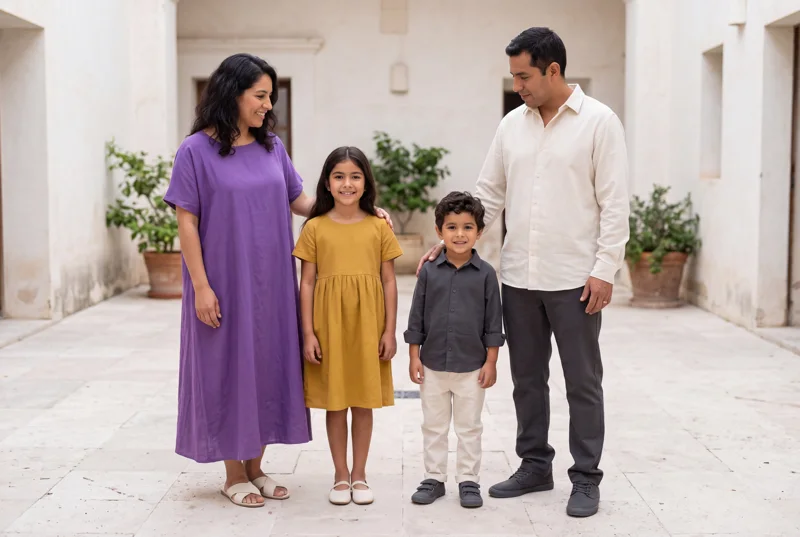
AI-created clothing example: Violet, Mustard, Ivory, Charcoal
  • Violet
  • Mustard
  • Ivory
  • Charcoal

Violet and mustard offer contrast. Mustard is less bright than pure yellow.

Outfit distribution: violet dress; ivory shirt and charcoal trousers; mustard dress; charcoal shirt and ivory trousers.

17. Sunflower yellow and denim
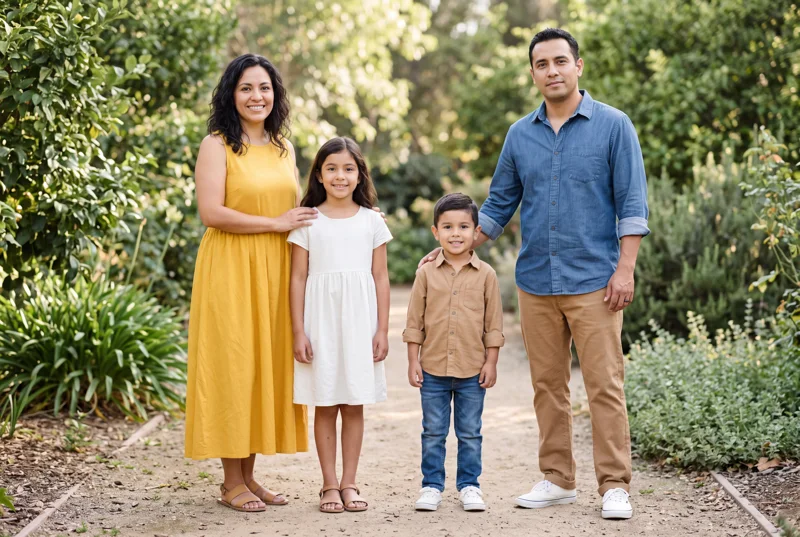
AI-created clothing example: Sunflower yellow, Denim blue, White, Camel
  • Sunflower yellow
  • Denim blue
  • White
  • Camel

Yellow and denim create contrast. Avoid a background that matches the yellow dress too closely.

Outfit distribution: sunflower yellow dress; denim shirt and camel trousers; white dress; camel shirt and denim jeans.

18. Butter yellow and pale blue
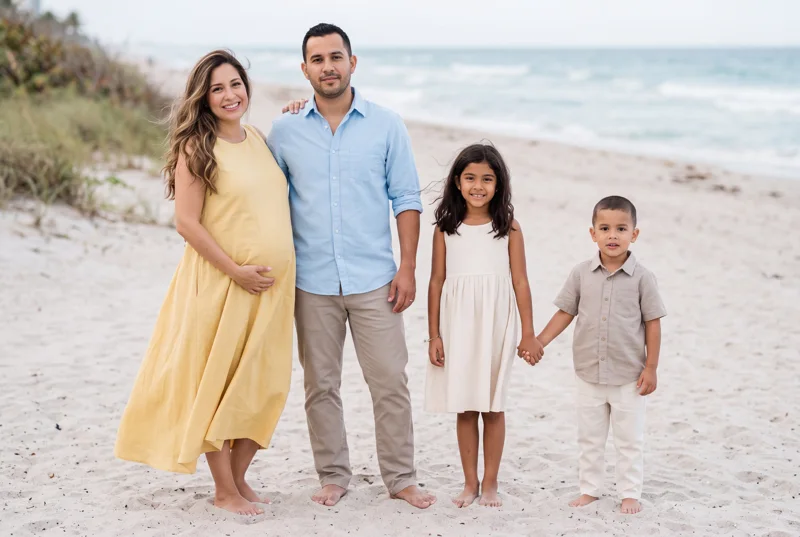
AI-created clothing example: Butter yellow, Pale blue, Ivory, Stone
  • Butter yellow
  • Pale blue
  • Ivory
  • Stone

Light yellow and blue make a gentle combination. Stone adds definition to individual garments.

Outfit distribution: butter yellow dress; pale blue shirt and stone trousers; ivory dress; stone shirt and ivory trousers.

19. Mustard and petrol blue
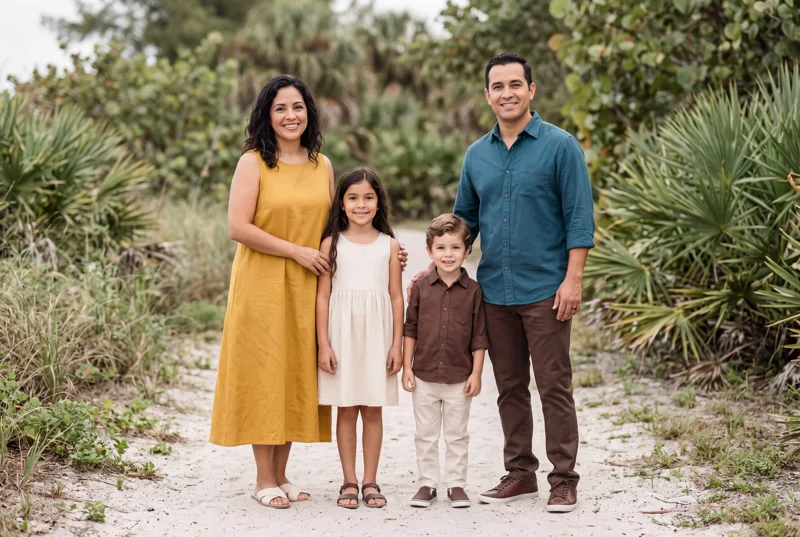
AI-created clothing example: Mustard, Petrol blue, Cream, Chocolate
  • Mustard
  • Petrol blue
  • Cream
  • Chocolate

Petrol blue adds depth, cream lightens the group and chocolate connects trousers and shoes.

Outfit distribution: mustard dress; petrol blue shirt and chocolate trousers; cream dress; chocolate shirt and cream trousers.

20. Emerald and ivory
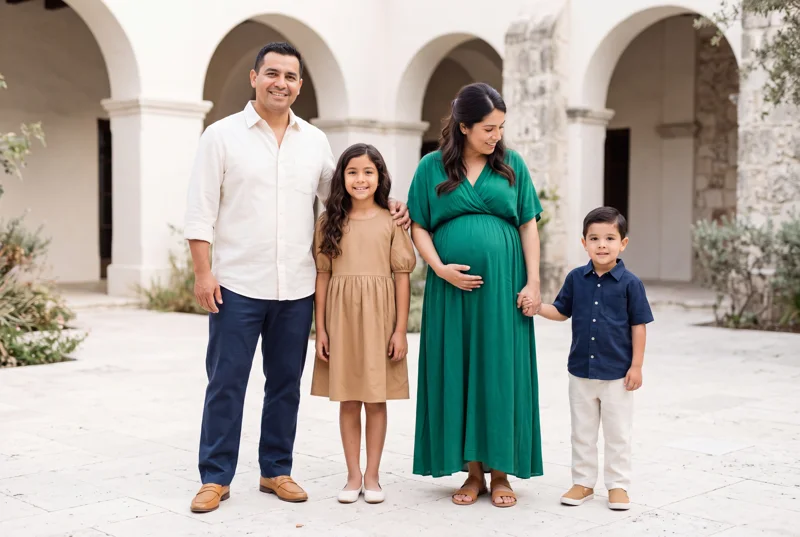
AI-created clothing example: Emerald, Ivory, Camel, Navy
  • Emerald
  • Ivory
  • Camel
  • Navy

Emerald is stronger than sage. A lighter background can help it stand out.

Outfit distribution: emerald dress; ivory shirt and navy trousers; camel dress; navy shirt and ivory trousers.

21. Forest green and light blue
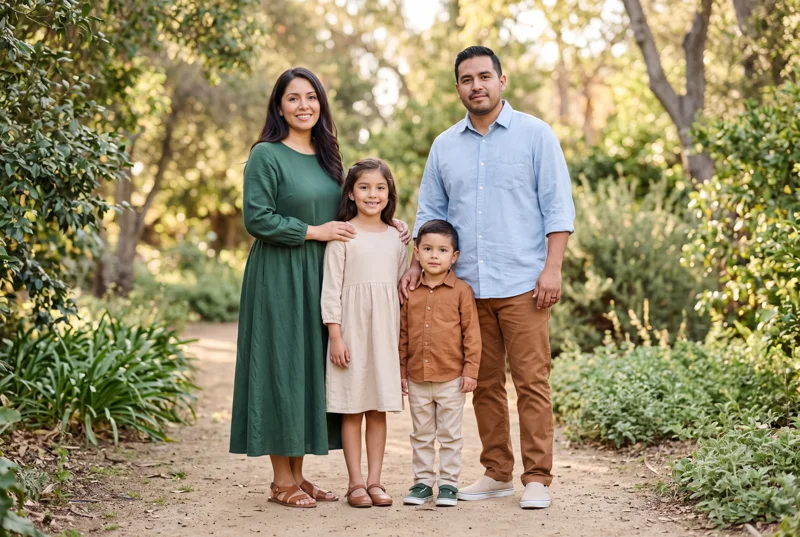
AI-created clothing example: Forest green, Light blue, Oatmeal, Cognac
  • Forest green
  • Light blue
  • Oatmeal
  • Cognac

Nearby green and blue hues work with the warmth of oatmeal and cognac.

Outfit distribution: forest green dress; light blue shirt and cognac trousers; oatmeal dress; cognac shirt and oatmeal trousers.

22. Fuchsia and navy
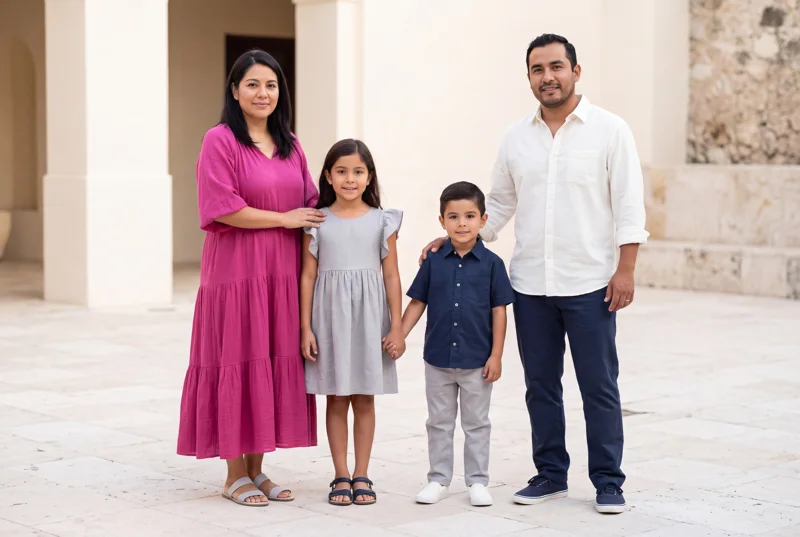
AI-created clothing example: Fuchsia, Navy, White, Pearl gray
  • Fuchsia
  • Navy
  • White
  • Pearl gray

Let fuchsia express a love of vivid color. Navy adds depth and white separates the outfits.

Outfit distribution: fuchsia dress; white shirt and navy trousers; pearl gray dress; navy shirt and pearl gray trousers.

23. Coral and sky blue
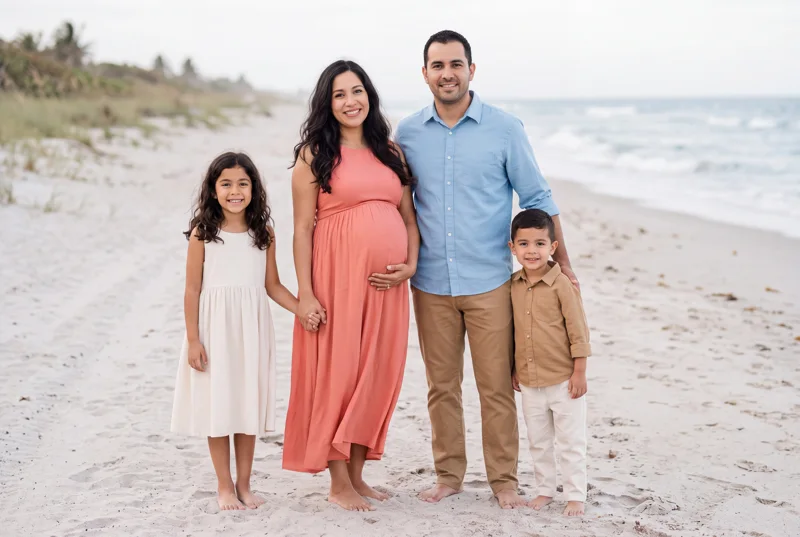
AI-created clothing example: Coral, Sky blue, Ivory, Camel
  • Coral
  • Sky blue
  • Ivory
  • Camel

Coral is warmer than blush. Sky blue provides a lighter counterpoint.

Outfit distribution: coral dress; sky blue shirt and camel trousers; ivory dress; camel shirt and ivory trousers.

24. White, black and gray
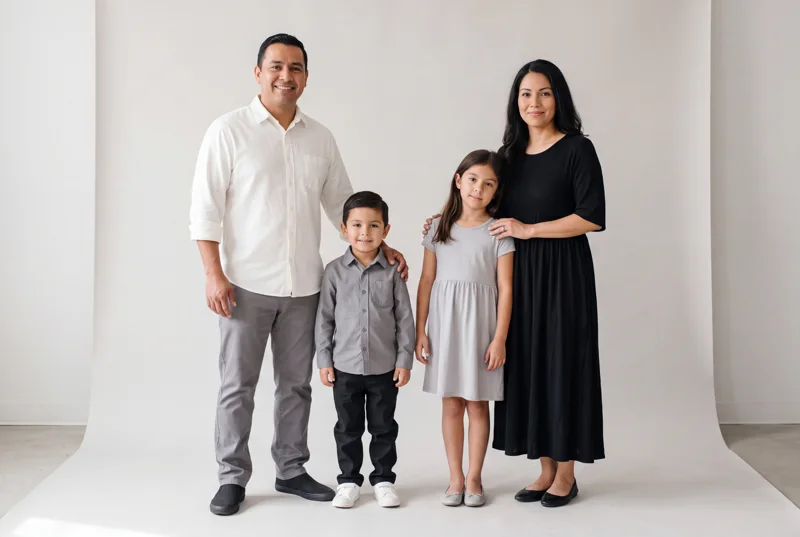
AI-created clothing example: Black, White, Medium gray, Pearl gray
  • Black
  • White
  • Medium gray
  • Pearl gray

Light-dark contrast defines this combination. Texture helps black clothing retain visual detail.

Outfit distribution: black dress; white shirt and medium gray trousers; pearl gray dress; medium gray shirt and black trousers.

25. Tangerine and navy
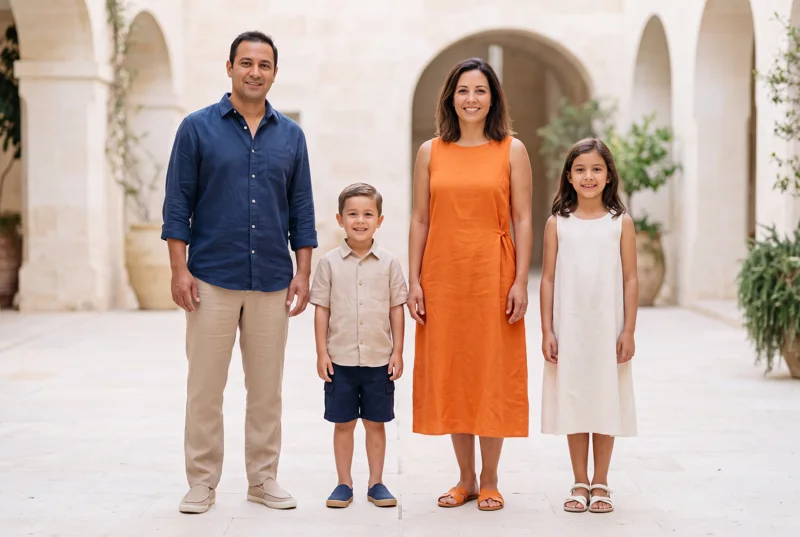
AI-created clothing example: Tangerine, Navy, Ivory, Sand
  • Tangerine
  • Navy
  • Ivory
  • Sand

Tangerine commands attention. Navy provides depth while the neutrals create space between them.

Outfit distribution: tangerine dress; navy shirt and sand trousers; ivory dress; sand shirt and navy trousers.

26. Rust and sage
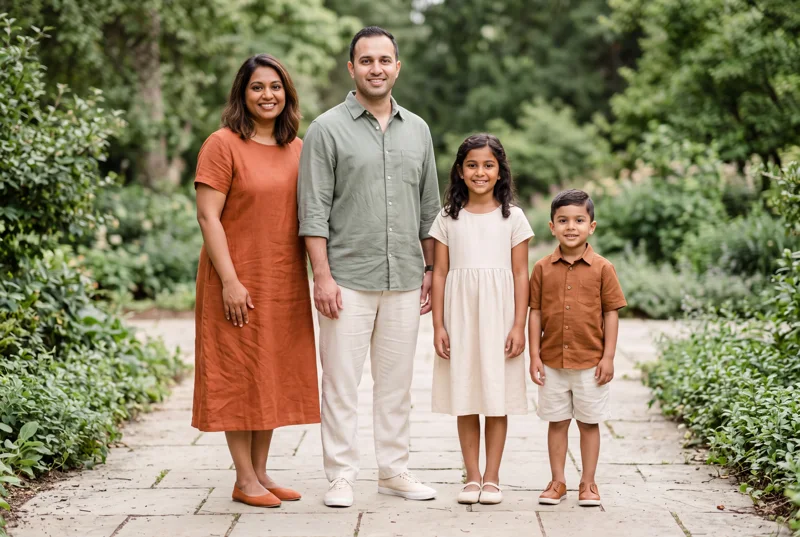
AI-created clothing example: Rust, Sage, Cream, Cognac
  • Rust
  • Sage
  • Cream
  • Cognac

Rust is earthier than tangerine. Sage suits a natural palette with some color.

Outfit distribution: rust dress; sage shirt and cream trousers; cream dress; cognac shirt and cream trousers.

27. Apricot and eucalyptus
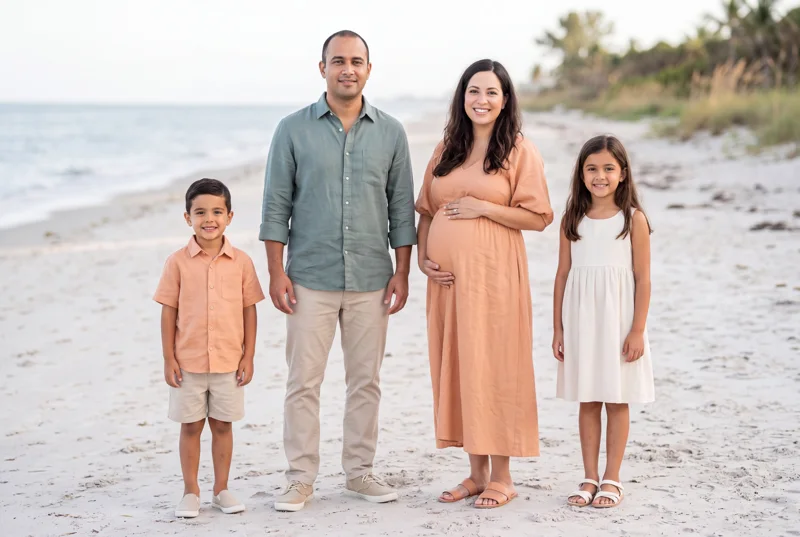
AI-created clothing example: Apricot, Eucalyptus, Ivory, Oatmeal
  • Apricot
  • Eucalyptus
  • Ivory
  • Oatmeal

This is a warm, gentle option. Eucalyptus adds separation if the background is also beige.

Outfit distribution: apricot dress; eucalyptus shirt and oatmeal trousers; ivory dress; apricot shirt and oatmeal trousers.

28. Chocolate and pale blue
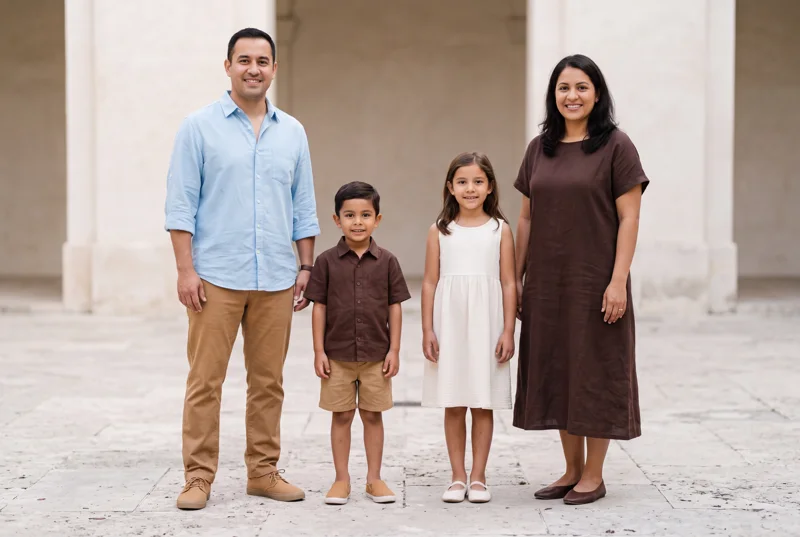
AI-created clothing example: Chocolate, Pale blue, Ivory, Camel
  • Chocolate
  • Pale blue
  • Ivory
  • Camel

Dark brown provides depth and pale blue lightens the group. Texture gives chocolate clothing more interest.

Outfit distribution: chocolate dress; pale blue shirt and camel trousers; ivory dress; chocolate shirt and camel trousers.

29. Chocolate and blush
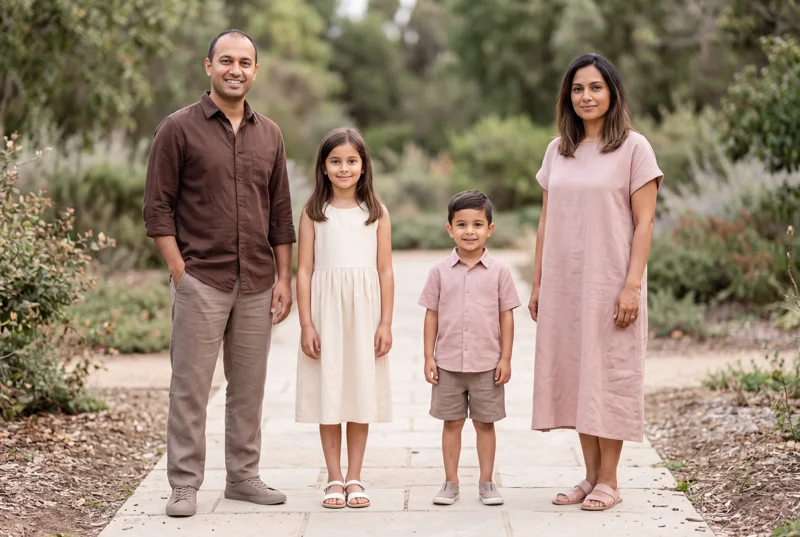
AI-created clothing example: Chocolate, Blush pink, Cream, Taupe
  • Chocolate
  • Blush pink
  • Cream
  • Taupe

Pink stands out against chocolate without needing a highly saturated shade. Repeat it in a second outfit if you want to spread it out.

Outfit distribution: blush pink dress; chocolate shirt and taupe trousers; cream dress; blush pink shirt and taupe trousers.

30. Blues from light to dark
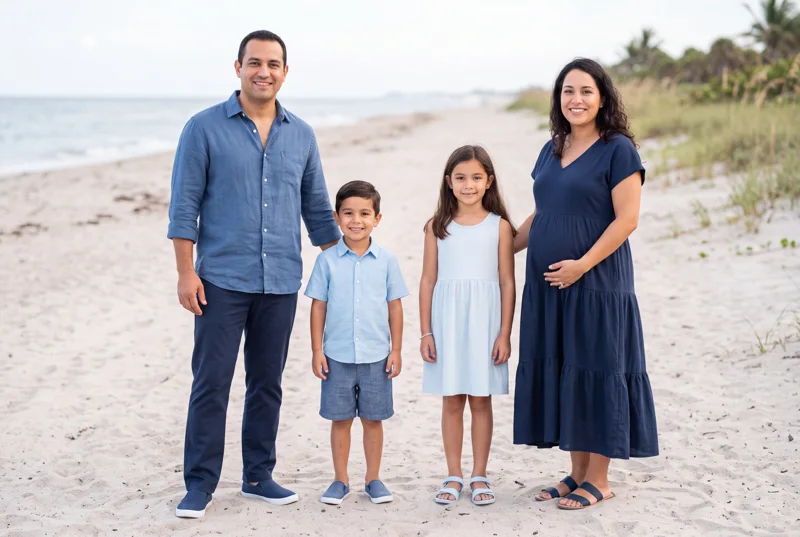
AI-created clothing example: Navy, Denim, Pale blue, Ice blue
  • Navy
  • Denim
  • Pale blue
  • Ice blue

A single color family can still have contrast. Alternate light and dark blues to distinguish each person.

Outfit distribution: navy dress; denim shirt and navy trousers; ice blue dress; pale blue shirt and denim trousers.

31. Greens from light to dark
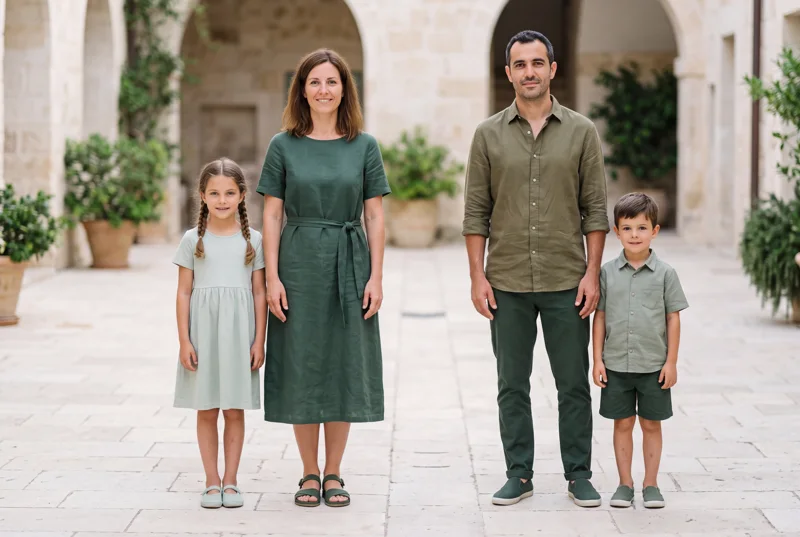
AI-created clothing example: Forest green, Olive, Sage, Mist green
  • Forest green
  • Olive
  • Sage
  • Mist green

These greens vary in brightness. Against park foliage, check that the darker clothes remain distinct.

Outfit distribution: forest green dress; olive shirt and forest green trousers; mist green dress; sage shirt and forest green trousers.

32. Pinks from light to dark
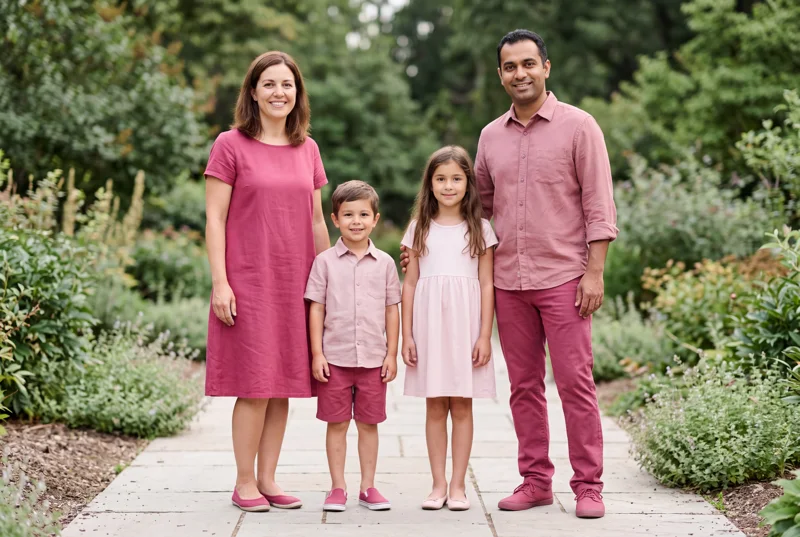
AI-created clothing example: Raspberry, Antique rose, Blush pink, Light pink
  • Raspberry
  • Antique rose
  • Blush pink
  • Light pink

Raspberry can be the focal point while lighter pinks add variety. Assign colors by preference rather than gender.

Outfit distribution: raspberry dress; antique rose shirt and raspberry trousers; light pink dress; blush pink shirt and raspberry trousers.

33. Purples from light to dark
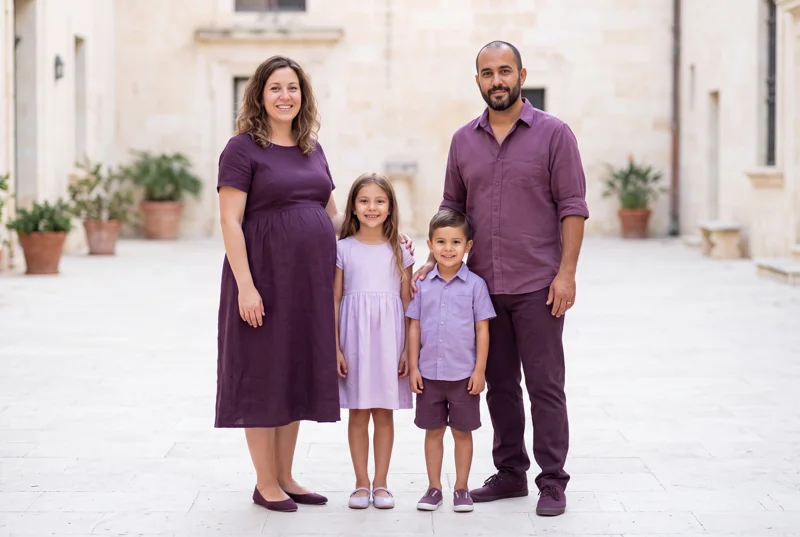
AI-created clothing example: Eggplant, Plum, Lavender, Light lilac
  • Eggplant
  • Plum
  • Lavender
  • Light lilac

Varying brightness keeps purple clothing from reading as one dark block. Solid fabrics show those differences clearly.

Outfit distribution: eggplant dress; plum shirt and eggplant trousers; light lilac dress; lavender shirt and plum trousers.

34. Two colors: navy and ivory
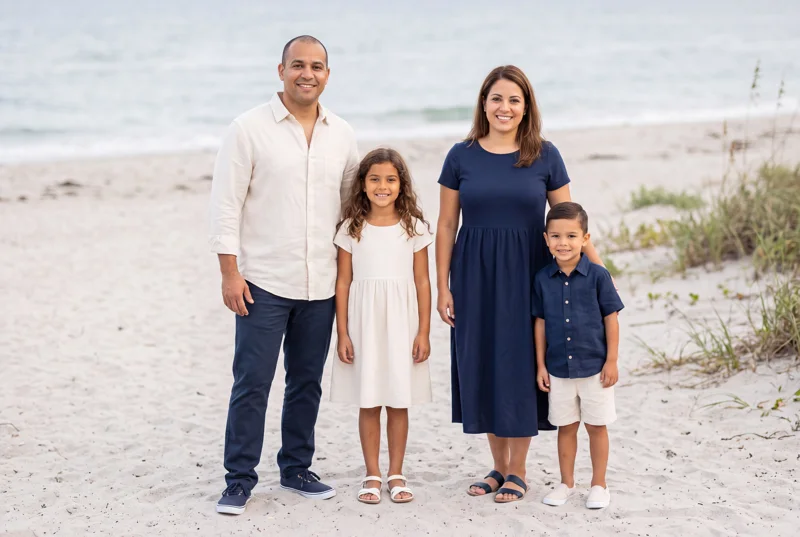
AI-created clothing example: Navy, Ivory
  • Navy
  • Ivory

Two colors simplify the search. Repeat them in different garments rather than buying identical outfits.

Outfit distribution: navy dress; ivory shirt and navy trousers; ivory dress; navy shirt and ivory trousers.

35. Two colors: terracotta and cream
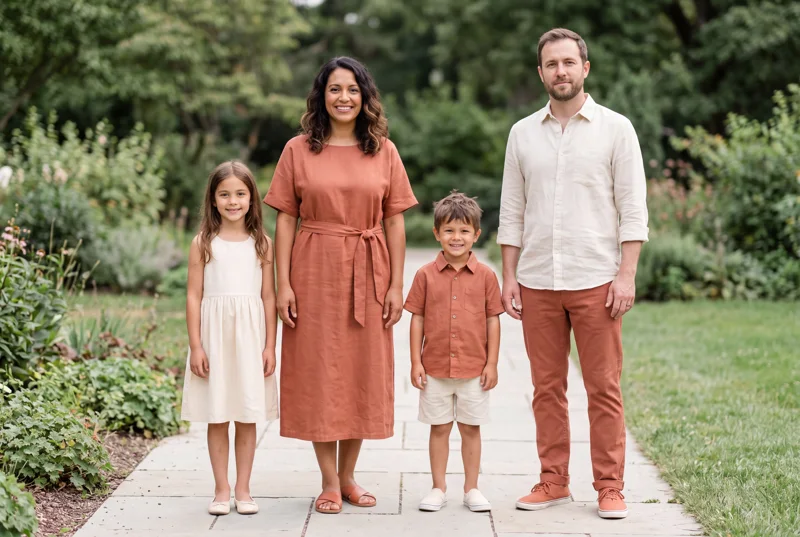
AI-created clothing example: Terracotta, Cream
  • Terracotta
  • Cream

Terracotta and cream give you warm contrast. Vary fabrics even when colors repeat.

Outfit distribution: terracotta dress; cream shirt and terracotta trousers; cream dress; terracotta shirt and cream trousers.

36. Two colors: black and camel
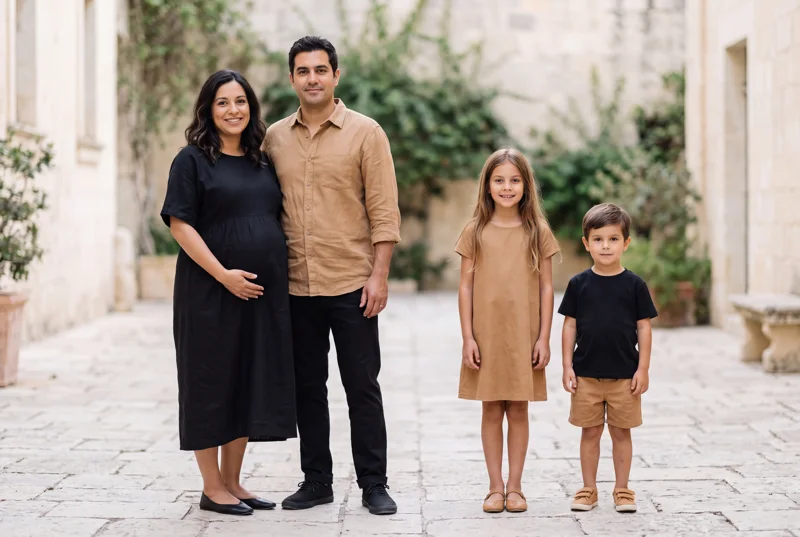
AI-created clothing example: Black, Camel
  • Black
  • Camel

For a restrained palette, distribute black around the group rather than concentrating it all together.

Outfit distribution: black dress; camel shirt and black trousers; camel dress; black shirt and camel trousers.

37. Two colors: burgundy and ivory
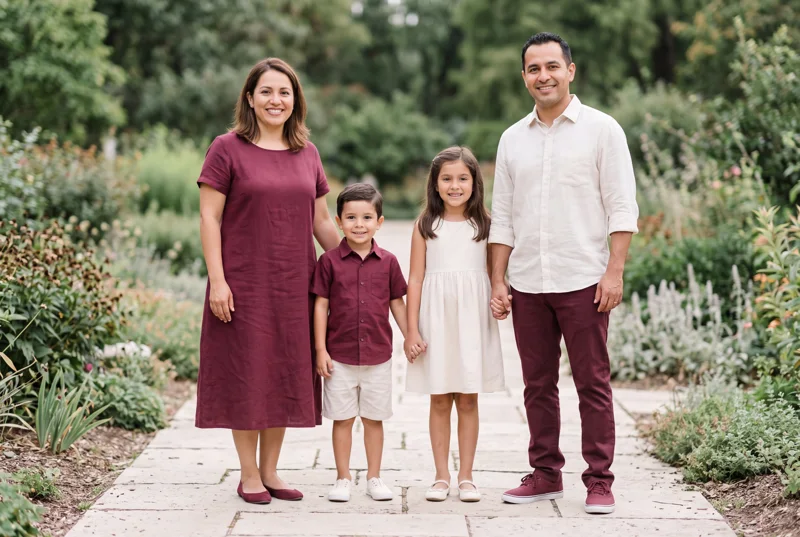
AI-created clothing example: Burgundy, Ivory
  • Burgundy
  • Ivory

Deep red and ivory can work throughout the year. The setting and accessories determine whether it feels festive.

Outfit distribution: burgundy dress; ivory shirt and burgundy trousers; ivory dress; burgundy shirt and ivory trousers.

38. Petrol blue, sage and seafoam
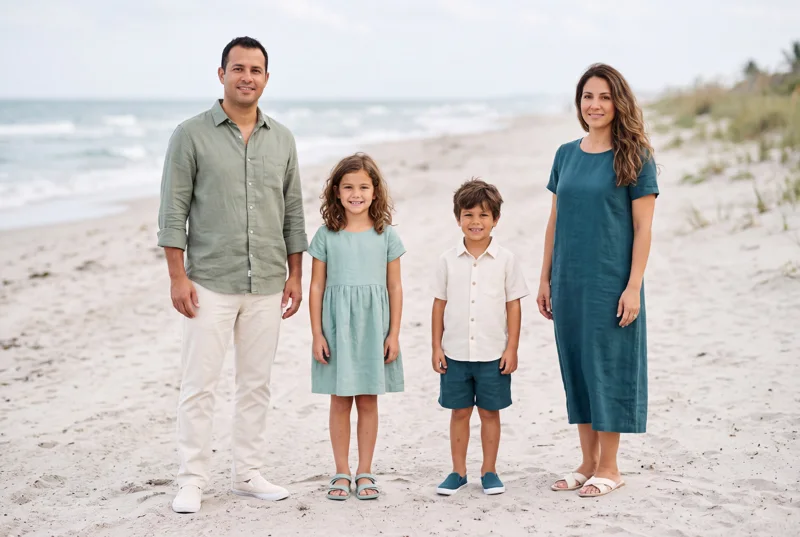
AI-created clothing example: Petrol blue, Sage, Seafoam, Ivory
  • Petrol blue
  • Sage
  • Seafoam
  • Ivory

Related blue-green shades share a direction. Ivory separates and lightens deeper tones.

Outfit distribution: petrol blue dress; sage shirt and ivory trousers; seafoam dress; ivory shirt and petrol blue trousers.

39. Peach, coral and old rose
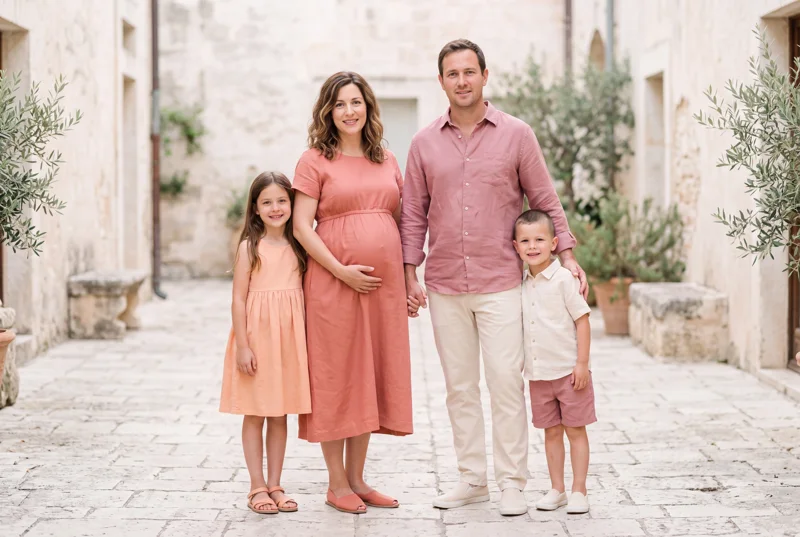
AI-created clothing example: Peach, Coral, Old rose, Cream
  • Peach
  • Coral
  • Old rose
  • Cream

These warm pink shades sit close together visually. Muted coral keeps the result gentler than fluorescent coral.

Outfit distribution: coral dress; old rose shirt and cream trousers; peach dress; cream shirt and old rose trousers.

40. Lavender and butter yellow
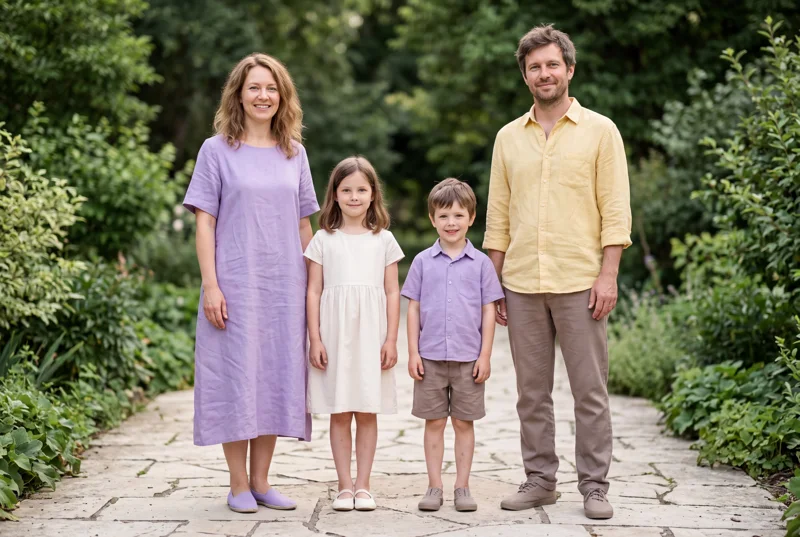
AI-created clothing example: Lavender, Butter yellow, Ivory, Taupe
  • Lavender
  • Butter yellow
  • Ivory
  • Taupe

Lavender and butter yellow create soft contrast. Keep yellow to one garment if you want lavender to lead.

Outfit distribution: lavender dress; butter yellow shirt and taupe trousers; ivory dress; lavender shirt and taupe trousers.

Tell me about the session you have in mind.

Share your preferred date and who will join you. I will contact you to discuss the details, pricing and availability.

An enquiry does not reserve a date or require a payment.

Loading your inquiry form…

Open the form in a new tab